• Home
  • Est. 1946
  • 2026 Rose List
  • 2026 Fruit Tree List
  • Garden Rewards
  • Newsletter
  • + Explore
    • Nursery
    • Edibles
    • Roses
    • Succulents & Cacti
    • Houseplants
    • Lazy K
    • Christmas Trees
  • Hours & Information
  • Events
  • Work With Us!
  • Gift Cards
  • Plant Care Sheets
  • Plant Warranty
  • Blog
  • 🔎 Search
  • Donation Request
  • Menu

 Orchard Nursery

  • Home
  • Est. 1946
  • 2026 Rose List
  • 2026 Fruit Tree List
  • Garden Rewards
  • Newsletter
  • + Explore
    • Nursery
    • Edibles
    • Roses
    • Succulents & Cacti
    • Houseplants
    • Lazy K
    • Christmas Trees
  • Hours & Information
  • Events
  • Work With Us!
  • Gift Cards
  • Plant Care Sheets
  • Plant Warranty
  • Blog
  • 🔎 Search
  • Donation Request

Herb Simple Syrup Recipe

June 06, 2017

Summer is a time for cocktails, lemonade, iced tea and anything sparkling!

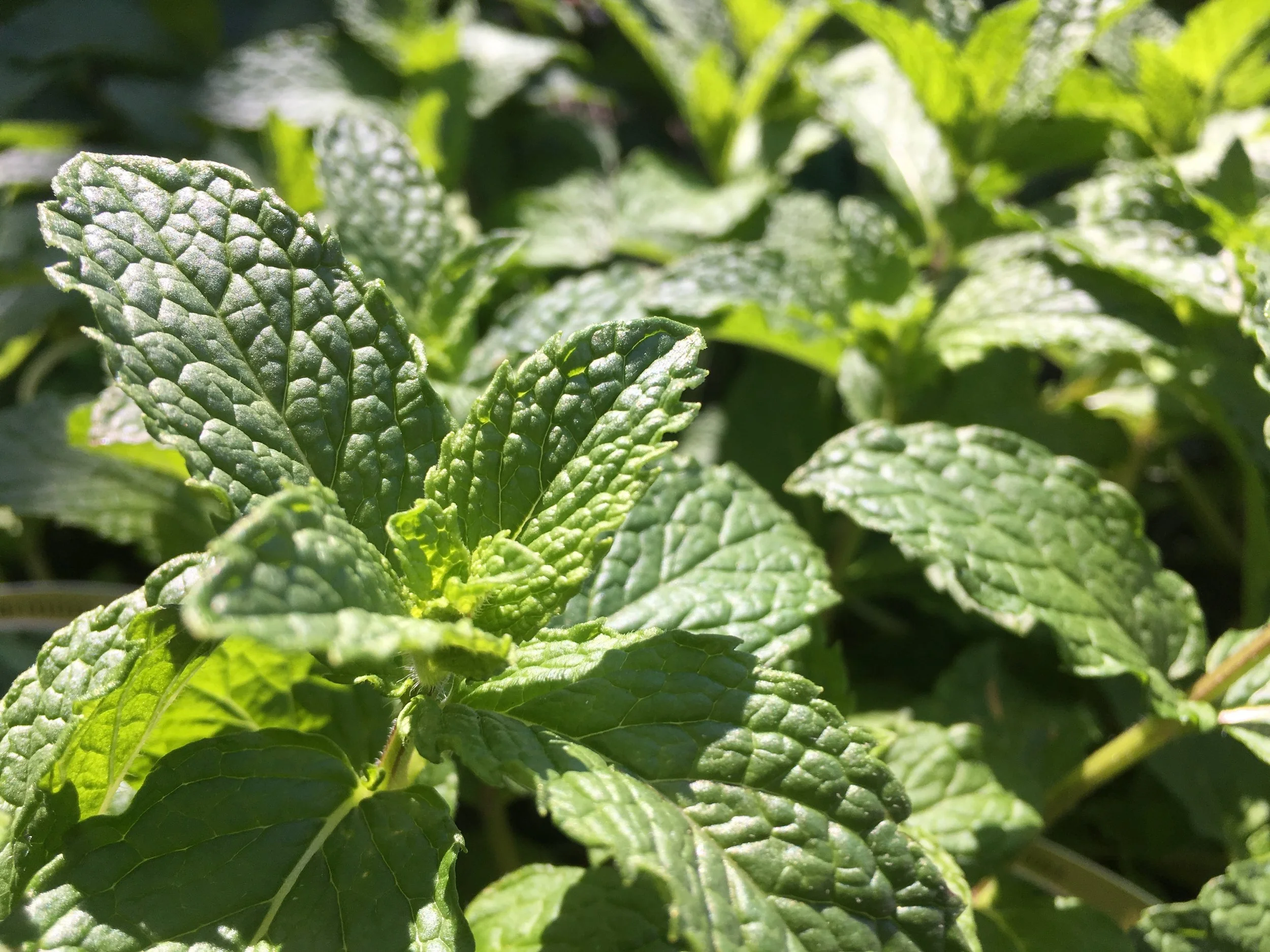
To take your summer favorites to the next level, incorporate rosemary, mint or tarragon freshly picked from the garden into your own herb simple syrup using the simple recipe below.

It's sure to be a refreshing addition the whole family can enjoy!

Herb Simple Syrup

makes about 1 cup

INGREDIENTS

  • 1 cup water

  • 1 cup sugar

  • ½ cup packed fresh herb leaves (amount needed may vary according to the strength of the herb and your taste)

PREPARATION

  1. Combine the water and sugar in a small saucepan over medium heat, stirring until the sugar dissolves. Bring to a boil and then turn off the heat.

  2. Add the leaves to the syrup and cover, steeping for about 30 minutes as the mixture cools. Timing may vary depending on the herb; a strong herb like rosemary should be removed sooner. Taste as you go.

  3. Strain the syrup through a fine-meshed sieve or through several layers of cheesecloth. Pour into a jar or bottle and label.

  4. The syrup is best when fresh but keeps in the refrigerator for about 2 weeks.

Recipe from CUESA

Incorporating Edible Flowers Into Your Culinary Creations

May 31, 2017

Edible flowers may be used culinarily in a variety of ways. They make colorful, striking garnishes for drinks as well as food, for everything from salads to soups and desserts.

We love Sunset’s Eat-Your-Garden-Salad, as it inspires us to take a second look at our blooming beauties and add them to our plate. Nasturtium petals are a classic addition for a bit of peppery and mustardy flavor, but we love the idea of throwing in a few pansy petals for unexpected coloring.

We also love this Squash Blossom Pesto Pizza, incorporating one of our favorite edible flowers and delicious roasted tomatoes. (Psst! Missed Randall’s Simple Basil Recipe? Be sure to stop in to pick up our fresh basil to incorporate in your summer cooking today!)

Perfect for a summer party, decorate your water pitcher or ice cubes with peony, rose, pansy, nasturtium, violet and geranium petals for an unexpected pop of color in your chilled summer drinks. Don’t forget the dessert! Adorn your summer sweets with dandelions, fuchsia, gladiola, gardenia, hibiscus, lavender, primrose, jasmine and more to add unexpected beauty to your tasty delights! A sprinkle of flower petals over a cake is an easy way to add charm to a simple dessert.

Once you start growing your flowers to be eaten, it is best to grow them as organically as you can. Looking for a particular flavor? Edible flowers can pack a punch of sweet, peppery or tangy flavor. With so many options (listed below), you’ll be sure to find the perfect garnish for your summer cooking!

  • Bachelor Buttons: varies from sweet to spicy, with clove flavor

  • Basil: lemon and mint flavors

  • Borage: cucumber flavor*

  • Calendula: spicy, tangy, peppery*

  • Carnations: spicy, peppery, clover-like flavor and aroma

  • Chive: onion flavor

  • Citrus: sweet and highly scented, use frugally

  • Day Lilies: slightly sweet like lettuce or melon

  • Dianthus: clove-like flavor*

  • Fuchsia: tangy flavor

  • Hibiscus: famously used in teas, tart cranberry flavor

  • Jasmine: sweet and super fragrant, use in teas

  • Lavender: floral, add to sweet and savory dishes

  • Marigolds: spicy to piquant, bitter

  • Mint: minty intensity varies among varieties

  • Mums: slightly piquant to very bitter*

  • Nasturtiums: peppery*

  • Pansies: varies from sweet to tart flavor

  • Rosemary: pine-like flavor

  • Roses: sweet flavor

  • Stocks: from spicy to sweet flavor*

  • Squash: sweet flavor

  • Thyme: lemon flavor

  • Violas: from mild wintergreen flavor to bland*

*Flowers you can have for the cool season (September - March)


Watering 101

May 24, 2017

With the official start of summer just around the corner, here is a quick review of our watering, soil prep and planting basics from our Watering 101 care sheet.

Watering to Establish

The goal of good watering (deeply and infrequently) is to encourage roots to grow deeper and access a larger, more stable volume of water which isn’t subject to the drying effects found at the surface. Deep soaking puts water down where you want the roots to grow and infrequent watering forces them to go searching. Only new plantings and plants in pots are okay with daily water when needed.

How to Water

How you apply water has a lot to do with where it ends up. Very few soils around here can absorb an hour's worth of water applied all at once; you may have to apply it more slowly or in smaller doses. So how do you deep water?

  • When watering by hand: for smaller plants, it’s best to build a basin which extends just beyond the drip line and fill it two or three times. For larger plants, apply a slow trickle of water for 20 to 30 minutes at several spots around the drip line of the plant.
  • When watering by sprinkler (in ground or manual): run your sprinkler to the point of run-off; turn off and allow the water to penetrate, repeat once or twice. Most sprinkler systems can and should be programmed to cycle through stations repeatedly. It’s always best to water in the morning so your plants are dry before nightfall when wet foliage will encourage a number of diseases.
  • When watering by drip system: run system long enough (usually an hour or two) to apply adequate water; most emit a gallon or two per hour. Water moves down and out through the soil, wetting a cone of soil, so initially, emitters should be placed on top of the root ball a few inches out to the side so the water will miss the roots. Check emitters regularly, as they clog easily.

How Often to Water

Determine watering frequency by periodically measuring how long it takes for a plant to start wilting after it has been watered thoroughly. This gives you the maximum time between waterings under those weather conditions.

“Needs regular watering” is different for every plant, but usually means that plant will never be entirely self-sufficient.

Factors to Consider

  • Plant type: Trees root more deeply than shrubs or perennials; leaves that are smaller, more gray, or needle-like are all adapted to require less water. Natives may need water for the first month or two, but then want nothing beyond what mother nature gives them.
  • Establishment time: Assuming good watering practices, the longer a plant is in the ground the more established and less frequently it will need supplemental watering. New plantings, on the other hand, can require water more than once a day—check on them frequently.
  • Soil conditions: The fine particles of our clay soils accept water more slowly and hold onto it more tightly than sandy or loamy soils which drain more quickly.
  • Exposure: The amount of sun and when it’s received affects how quickly a plant will dry, as will reflected heat from walls and wind.
  • Weather: Cool and humid weather minimize water usage while warm, dry and windy weather are water demanding. Spring and summer also signal higher water use because plants are actively growing and conditions are more extreme.

Like a parent, take extra care in the beginning to nurture your plants. Meet their needs (without spoiling them) and help establish them so they become as self-sufficient as possible. Whether you have questions on existing plants in your garden or need advice on selecting new ones, we are always here to help! 

Pictured: English Thyme, "Large Leaf" Italian Basil (just restocked) and Plain Italian Parsley.

Pictured: English Thyme, "Large Leaf" Italian Basil (just restocked) and Plain Italian Parsley.

Herbs You Can Grow In Your Kitchen

May 19, 2017

Using herbs and spices while you cook creates exciting flavors and opportunities for experimenting. Growing fresh herbs in your kitchen is not only more fun, it makes them convenient to use and adds beauty to your home to boot! So, gather some clay pots and create space on a north or west-facing windowsill (for indirect light) or get creative and DIY using one of these fun ideas from Brit + Co. However you arrange the herbs, check out our favorites below and some simple tips for growing them indoors!

Oregano

Oregano is often used in Italian, Greek and Spanish cooking. It needs excellent drainage and six to eight hours of bright, indirect light. Allow oregano to dry out between waterings and fertilize every two weeks.

Basil

Basil has an impressive list of nutrients in it and is used for a summer favorite: pesto! Use smaller basil varieties indoors, as the larger ones will quickly outgrow small spaces. Basil needs at least six hours of indirect light and damp, well-drained soil.

Mint

Mint is an excellent palate cleanser and promotes digestion. We love to use it in tea or a summer cocktail. All varieties of mint can grow inside. Keep moist and mist between waterings. Place in an area with bright, indirect sunlight.

Parsley

Parsley is an excellent source of vitamin K and C and is often used in salads, soups and sauces. It grows best with six to eight hours of bright, indirect sun daily. Keep the soil slightly moist and fertilize every two weeks.

Thyme

Thyme is often used in Italian recipes and is also a primary herb in stews and soups. It needs about six hours of daily indirect sun. It benefits from drying out between waterings and fertilizing every two weeks.

Protecting Your Garden From Gophers

May 17, 2017

Noticing someone digging up your garden? Spending their days creating tunnels called “gopher towns,” gophers are active day and night, destroying landscapes and lawns in their path. They are especially attracted to moist, light soil with edible vegetation, meaning our lush gardens! Here are a few of our recommended products to keep these pesky critters out of your garden.

Before you start planting, pick up a few Digger’s Root Guard Heavy Duty Baskets. Available in one, three, five and 15-gallon sizes, the wire baskets are galvanized for increased durability and corrosion resistance. Allowing generous room for root growth and up-sizing, we love how easy these baskets are to plant in.

The one-gallon sizes are made for perennials, berries and vegetables. Use the three-gallon basket for group plantings of annuals, perennials and bulbs; this size is also perfect for your tomatoes, salvias, squash and peppers! Keep your roses, bougainvillea, wisteria and dahlias protected in the five-gallon basket. Providing six to 10 years of protection, the baskets can be removed end of season for reuse next year.

The new roots of a young fruit tree are a gopher’s favorite treat. Digger’s 15-gallon tree basket is created from the same material as their other baskets, but galvanized before weaving, thus allowing the basket to break down in three to five years - just in time for the tree to become established and resistant to gophers. (Most fruit trees are resistant after their third year.)

For plants already in the ground, we recommend Bonide’s MoleMax Granules. Repelling moles, voles, gophers, rabbits and skunks, it’s easy to use and safe around children and pets. Apply directly from the bag; broadcast or use a drop spreader in both live areas and territory that has yet to be invaded. Penetrating deep into the soil, one pound of the clean, dustless and biodegradable granules treats 500 square feet and lasts up to three months. It’s best to start on one side of the yard and work your way over, making it easy to know what parts of your garden still need to be treated.

Questions? We’re here to help. Stop in and let us lend a hand in protecting your garden from gophers' gnawing today!

chimichurri recipe.jpg

A recipe for grilling season: Chimichurri

May 16, 2017

As grilling season approaches, we love this chimichurri sauce as a marinade on the BBQ. Made with fresh parsley and oregano, this easy recipe is a perfect addition to your next cookout!

Ingredients:

  • 1 cup firmly packed fresh flat leaf parsley, trimmed of thick stems
  • 3 - 4 garlic cloves
  • 2 Tbsps fresh oregano leaves (or substitute with 2 teaspoons dried oregano)
  • 1/2 cup olive oil
  • 2 Tbsps red or white vinegar
  • 1 teaspoon sea salt
  • 1/4 teaspoon freshly ground pepper
  • 1/4 teaspoon red pepper flakes

Directions:

  1. Finely chop the parsley, fresh oregano and garlic (or pulse in a food processor several times) and place in a small bowl.
  2. Stir in olive oil, vinegar, salt, pepper and red pepper flakes. Adjust seasoning. Serve immediately or refrigerate.
  3. If chilled, return to room temperature before serving. It can be kept for up to two days.

Serves 4

Employee Spotlight: Shawna Anderson

May 10, 2017

Hi! My name is Shawna Anderson and I am the head of Orchard Nursery & Florist’s Custom Container Department. 

How long have you been working at Orchard Nursery & Florist?

Since July of 2004.

What is your favorite part about working here?

There are many reasons why I love working here, but if I have to pick just one, it's the plants. Every season there's something in bloom and being the flower "floozy" that I am, I just love them and want them all!

What's new in the Custom Container Department?

There are some really cool wavy containers we just got in lime green, white and orange that are perfect for succulents.

What are some of your favorite plants to work with and why?

My favorite "fillers" for sun will always be Nemesia; they come in a wide range of colors and bloom for a long period (with deadheading of course)! My absolute favorite "spiller" is Calibrachoa aka Million Bells; I love their prolific long-lasting blooms and they don't need deadheading!

What are some upcoming projects you are excited about?

Planting up herb baskets and boxes for summer parties!

What is your favorite season and why?

Spring. Song of Solomon said it best, "For lo, the winter is past, the rain is over and gone. The flowers appear on the earth; the time of singing has come, and the voice of the turtledove is heard in our land."

What is your favorite vegetable to grow and cook with and why?

Oh, it just so hard to pick one favorite! It's got to be Romanesco Cauliflower; it's a cross between broccoli and cauliflower. I usually sautĂ© it in olive oil, a few pepper flakes and a pinch of sea salt, but last winter I sliced it thin and roasted it and used it as a pizza topping--amazing! I also learned from a customer a few years ago that the leaves are just as good (they have a nutty flavor), and I've been sautĂ©ing them the same way ever since. Delicious!

What do you do in your spare time - any hobbies?

Spare time? Haha! When I'm not here or at a client's home for a Thrillers, Fillers and Spillers consultation, I'm in my garden or watching the Warriors. They've been my team since I was 8 years old and I've watched them lose a lot of games over the years, so these past few years have been exciting and awesome to watch!

What is something that people might not know about you?

I became a semi-professional billiards player in 2000. Don't bet against me on the pool table :)

Prev / Next

Keep reading!

Featured
Nov 16, 2018
The Story Behind our Harvest Fest Farm Animals
Nov 16, 2018
Nov 16, 2018
Nov 2, 2018
How To: Revive Your Houseplants
Nov 2, 2018
Nov 2, 2018
Aug 6, 2018
How To: Preserving Herbs
Aug 6, 2018
Aug 6, 2018
Jun 28, 2018
From The Orchard: Stone Fruit
Jun 28, 2018
Jun 28, 2018
May 23, 2018
Blueberries 101
May 23, 2018
May 23, 2018
Apr 6, 2018
The Herb List
Apr 6, 2018
Apr 6, 2018
Feb 26, 2018
Lilacs 101
Feb 26, 2018
Feb 26, 2018
Aug 15, 2017
Citrus Care 101
Aug 15, 2017
Aug 15, 2017
Jul 7, 2017
Bougainvillea 101
Jul 7, 2017
Jul 7, 2017