Roasted Roots with Kale, Mustard Vinaigrette, and Farm Egg

Serves 2 to 3

INGREDIENTS 

  • 1 bunch baby turnips
  • 1 pound mixed baby potatoes
  • 1 kohlrabi
  • 2 tablespoons olive oil
  • 2 tablespoons extra-virgin olive oil
  • 2 sprigs rosemary
  • 1 tablespoon salt
  • Cracked black pepper
  • 1/2  pound baby kale
  • 1 egg per person (optional)

Mustard Vinaigrette

  • 1 tablespoon whole-grain mustard
  • 2 tablespoons champagne vinegar
  • 1/4  teaspoon salt
  • 6 tablespoons olive oil

PREPARATION

1.    Preheat the oven to 375ËšF.

2.    Scrub the rutabaga and turnips clean using a clean brush, then cut into bite-sized pieces. Peel the kohlrabi, removing all its tough outer skin. Cut the kohlrabi to match the size of the baby turnips and baby potatoes, so they will roast evenly.

3.    In a roasting pan, place the roots, 1/4 cup water, olive oil, rosemary, salt, and black pepper. Cover with aluminum foil and roast in the oven for 40 to 45 minutes. Check the vegetables with a small knife; it should go through without resistance.

4.    While the vegetables are in the oven, clean the kale. Make the vinaigrette by whisking together the mustard, vinegar, and salt, then slowly streaming in the oil while continuing to whisk the mustard mixture.

5.    When the roots are done, toss them, while still hot, in a bowl with the baby kale and vinaigrette.

6.    If you are adding the optional egg, warm a tablespoon of olive oil in a nonstick pan. Crack the eggs into the pan; season with salt and pepper. Once the whites are set, gently flip the eggs and cook until they reach the desired consistency. Alternatively, you can hard-boil the egg.

7.    Top each serving of vegetables with an egg and serve. This recipe will make extra. The leftovers are great as a cold salad the next day.

This recipe is from the website of CUESA (The Center for Urban Education about Sustainable Agriculture). www.cuesa.org This recipe was demonstrated for CUESA’s Market to Table program on March 9, 2013.

Source: Robin Song, Hog & Rocks


A New Leaf

If you haven’t already heard, we are making some exciting changes in our florist greenhouse! But first, let’s take a look back at our “roots”…

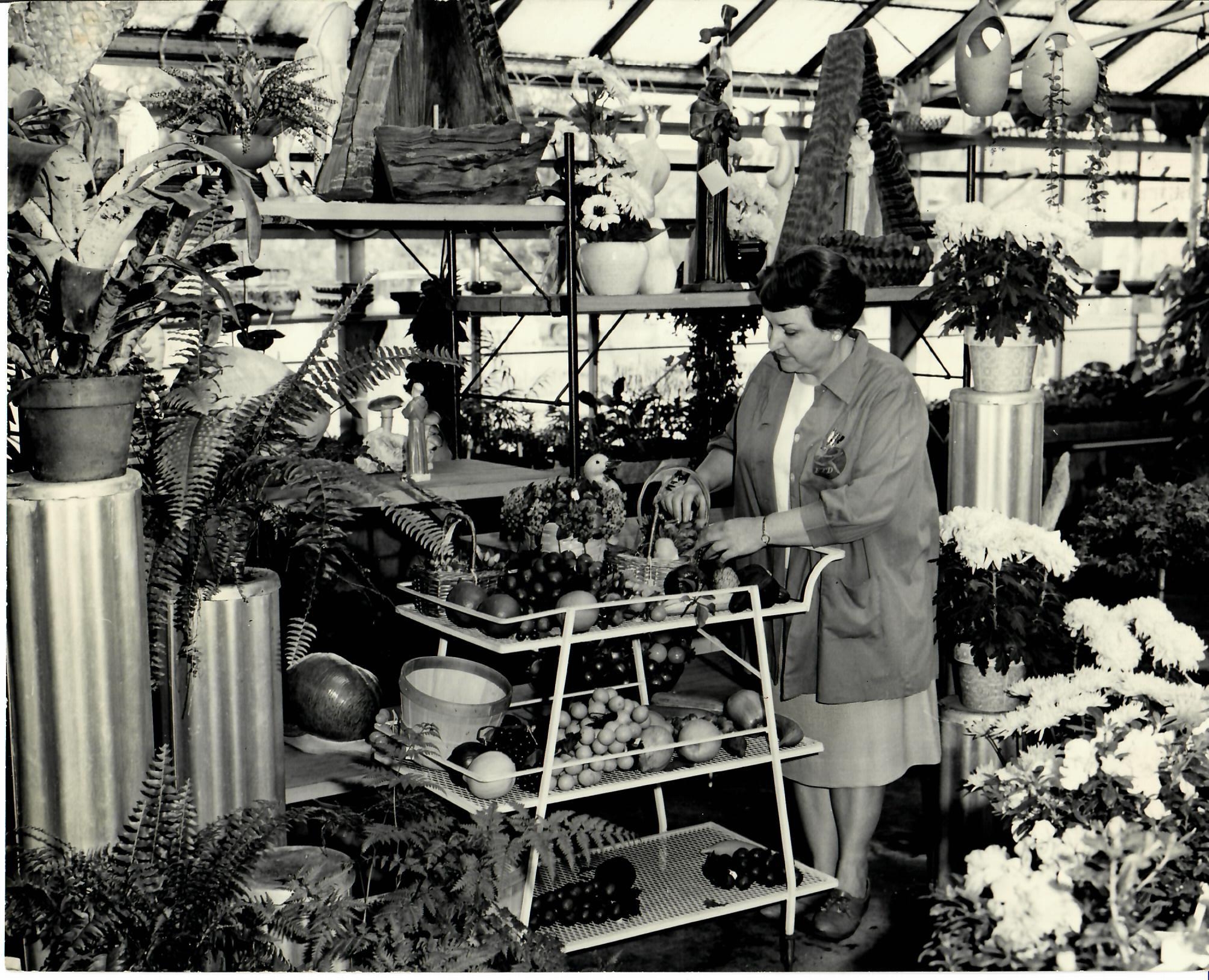
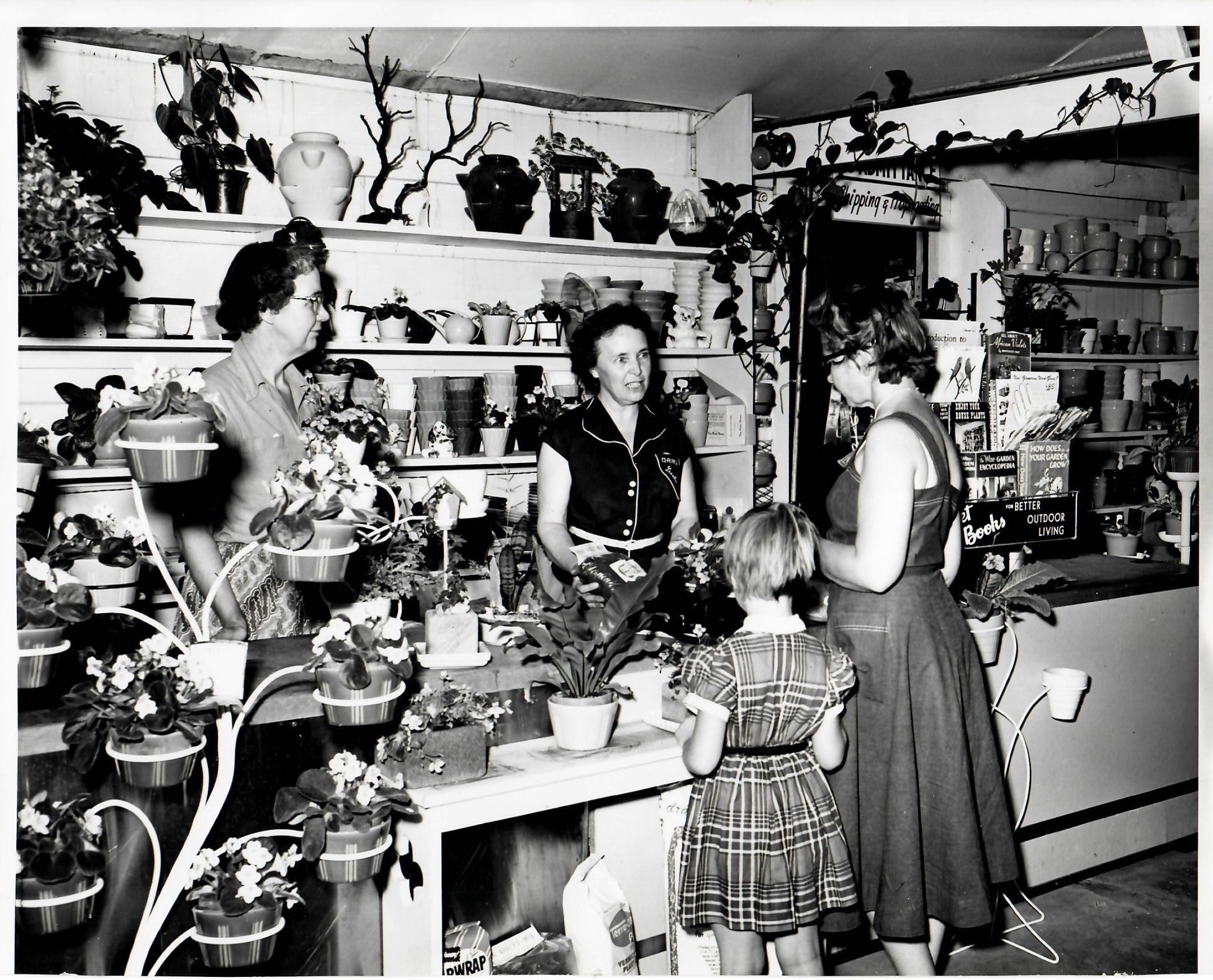
Did you know that when we first opened, we had no flower shop? The greenhouses up on the hill were used for growing & selling African Violets and some azaleas. Once the Lord and Burnham greenhouse (a state of the art model at the time) was added, the florist department really took shape and in 1962 our “true” florist became a reality. This was the heyday of carnations, chrysanthemums, marguerite daises and roses. More blooming plants were brought in along with houseplants and a big fridge full of cut flowers for our newly hired designers.

Here are a few great pictures of those early days…

Terracotta chickens are still available, as well as the "bubble bowls!"

Terracotta chickens are still available, as well as the "bubble bowls!"

3.jpg
1.jpg
On trend: faux fruit, ferns and chrysanthemums!

On trend: faux fruit, ferns and chrysanthemums!

A coffered ceiling! Our collection of silks or "everlasting" flowers can now be found in this alcove!

A coffered ceiling! Our collection of silks or "everlasting" flowers can now be found in this alcove!

This is our upper greenhouse, now used as storage for our Garden Shop.

This is our upper greenhouse, now used as storage for our Garden Shop.

When reminiscing about our past, it reminds us that our business and in turn, our industry is always evolving and sometimes “everything old is new again”. As we welcome in the New Year we’re going back to our roots in a way and will bring you a wide selection of beautiful plants presented in a brand new environment. We are excited about our new look and invite you to come discover it for yourself. Please excuse our "mess” as we work on creating an inspiring place to let your imagination run free.

In order to accommodate a much wider assortment of indoor plants of all kinds, we’re making room by eliminating all of our fresh cut flower offerings. This will give us the freedom to make room for more of what you’ve been asking for! More blooming plants, tropicals, tillandsia, houseplants and all the lovely things that go with them that make your home, apartment, loft or office a welcoming place to relax and enjoy.

Naturally, we will be continuing to send our lovely things as gifts for all your special occasions! If you need a designer for weddings and events, we highly recommend contacting Laura Vance at (510) 575-5591 and Sue Hayashi-Smith at (510) 457-8352 for an elegant and exquisite design. 

Come pay us a visit as we create a new and exciting atmosphere for you to shop and enjoy! 

Love these old images of the nursery as much as we do? Then read on to The History of Orchard Nursery & Florist

Bareroot 101

And she was fair as is the rose in May.

                                    - Geoffrey Chaucer

Plant a rose now and you’ll have flowers in May! Our bareroot roses, including David Austin varieties, have arrived, been potted up in pulp pots and are ready for purchase! 

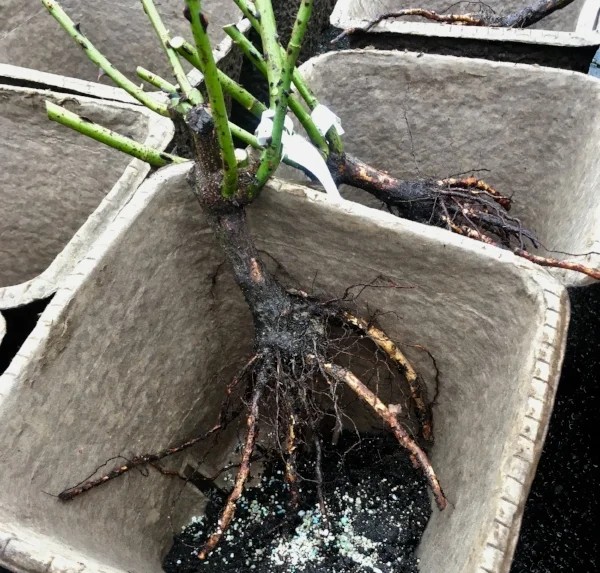
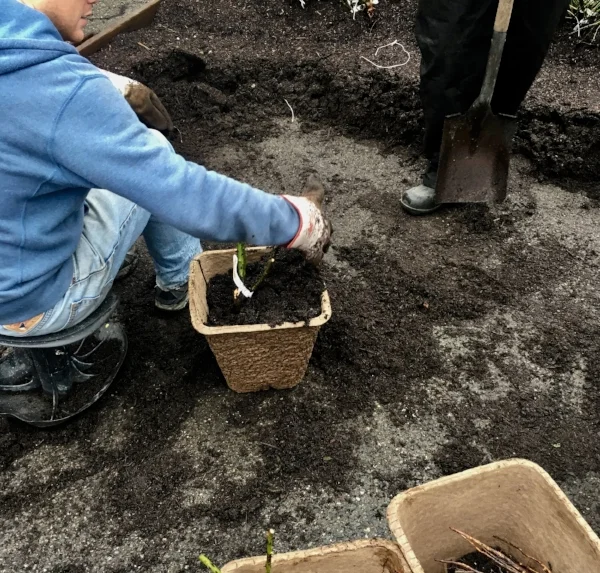
A shot of our bareroot roses, and below, our nursery staff potting them up for you!

A shot of our bareroot roses, and below, our nursery staff potting them up for you!

QUESTION OF THE MONTH: How should I plant bareroot roses and fruit trees that are in pulp pots?

We plant our bareroot roses and fruit trees in biodegradable pulp pots so that they can be planted through the growing season, not just during bareroot season (January and February).

How to plant your bareroot rose or fruit trees depends on what time of year you’re planting. It’s important to take note of the root development, which denotes when to remove it from its pulp pot and plant, or to plant it in the pulp pot to keep those roots protected!

THE MONTH OF PLANTING:

JANUARY - FEBRUARY: Remove plant from pulp pot and plant directly into the soil.

Our pulp pots will typically degrade completely within about a year. When planted early, we recommend taking bareroot plants out of the pots and planting as you would any bareroot plant.

MARCH - MAY: Plant pulp pot and plant together.

Once fully leafed out, roses and fruit trees are growing fine roots, which are easily broken. At this point, we recommend planting the pot and all to avoid transplant stress. Before planting, slit the sides of the pulp pot vertically in four places to within an inch or two of the top rim. The bottom may also be removed. Plant so that the soil in the pot is the same depth as the soil outside the pot. The rim of the pot may be removed, or you can leave it in place as a watering basin for the first year.

JUNE - AUGUST: Tear away pulp pot and plant your plant directly in soil.

Later in the season roots have developed enough that they will hold a root ball together. For best results at this stage, remove the pot by tearing it carefully away from the root ball. Don’t try to pull the plant out of the pot, as this will break roots.

eb-stone-sure-start-4lb-bag.jpg

“INSURANCE” for Bareroot Plants

Bareroot plants have been described as “sticks with roots”. If you’ve never planted anything from bareroot stock before, you might doubt that these leafless plants will ever amount to anything. But like a spring miracle, bareroot roses and fruit trees will leaf out and bloom the very first season (although it may take fruit trees a few years to produce a substantial crop).

Because they don’t have an established root system, we recommend helping bareroot plants by using Rootmaster B-1, which is more than regular B-1. It contains a hormone, similar to that in Rootone, that actually stimulates new white root hairs in plants. When used in conjunction with starter fertilizer, we recommend E.B. Stone Organics Sure Start 4-6-2, it gives plants a wonderful start and helps insure the health of the plant as it establishes in the landscape. Apply once a week, according to directions, for the first 4 to 6 weeks for healthy roots and shoots!

For planting roses we recommend using Pay Dirt. Formulated with chicken manure, redwood sawdust, peat moss and mushroom compost making it perfect not only for your roses but your veggie garden and flower beds too! Paydirt works to help loosen hard soils, (for all of us with that compacted clay!) and improves both water and root penetration.

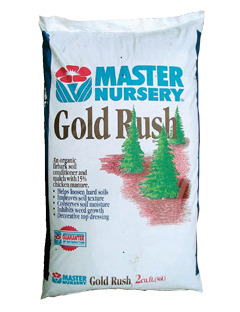
For your fruit trees, plant with Gold Rush. It’s a fir bark blend with 15% composted chicken manure. And it’s also on sale for the month of January (we’re talking January 2019!) Buy 3 bags of Gold Rush and receive 1 FREE! Gold Rush helps add important long-lasting organic matter to the soil, improves soil aeration and water penetration.

Questions? Stop in and talk with one of our nursery professionals today! 

December, 1985

Here's a throwback to December 1985! Does anyone remember receiving our newsletter in the mail at that time?

This era of our newsletter was created by Tom Giantvalley. Up in his office, on the second floor of the Lazy K, he meticulously hand wrote each version of the newsletter on a stencil. He then used a mimeograph to create copies, hand-cranking each individual copy through the machine. (These are the days long before digital copiers!)

Fun fact: Next time you're in the nursery, take a moment to identify the giant redwood behind the Lazy K, it was planted by Tom years ago. 

We at the nursery love looking through these old editions, a true nod to our past and rich with plant knowledge, character and wit! Enjoy! 

1985-newsletter-pg1.jpg
1985-newsletter-pg2.jpg
1985-newsletter-pg3.jpg
1985-newsletter-pg4.jpg

Keeping Your Holiday Greenery Fresh

The time between Thanksgiving and Christmas may feel like it passes in the blink of an eye, but it’s a long time to keep fresh holiday greenery inside the house! Cut trees, wreaths and garland can dry out and drop needles, but there are several ways you can help keep them fresh! 

Fresh greenery - find them in Garden's Gate! 

Fresh greenery - find them in Garden's Gate! 

Before bringing your tree in the house, spray it thoroughly with Cloud Cover or Wilt Stop and allow it to dry. This product is an anti-transpirant which keeps living plants and cut trees from losing excess water through the leaves. We also recommend using it on your wreaths and garland to keep them fresh.

Note that using Cloud Cover may suppress the fragrance of evergreens. Our trick? Stop into the Lazy K and shop their collection of Aromatique's Smell of the Tree room fragrances, potpourri and candles. Infuse your home with the scent of freshly cut evergreens, the quintessential scent of the season! 

Shop the Lazy K for the scent of the season!

Shop the Lazy K for the scent of the season!

Our top recommended products.

Our top recommended products.

Fresh cuts only work when done just before placing the tree into water.

It's the layer just under the bark that takes up water, so there's no need to cut all the way across the trunk. Just make a diagonal cut on the bottom 1/2" of the trunk, paring down the outer bark to expose fresh water-conducting tissue just before putting the tree in water. 

Fill the water bowl immediately after standing your tree, and top off the bowl frequently, especially the first few days, as the tree can take up a lot of water.

Use KEEPS-IT GREEN Christmas Tree Preservative in the water bowl to prevent the growth of bacteria that can block uptake of water. Add 1 ounce per 1 gallon of water. 

If possible, place your tree away from any heater vents, or close heater vents near the tree. 

These few simple steps will help keep your tree fresh till the New Year! Happy Holidays! 


Fall Garden Care

Every month we post our This Month In Your Garden (find it under the Resources tab!) to ensure you have a checklist of just want to plant and what plants need a little extra love. As we near winter, it is important to keep an eye out for anything that needs last minute attention before the weather grows colder, the days darker and we take shelter in our cozy abodes. Here are a few of our must-have garden tips we practice in our own yards, and a few things you shouldn't miss on your next visit...

Screen Shot 2017-11-20 at 1.38.48 PM.png

LAWNS

Feed lawns with Master Nursery's Fall & Winter Feed 20-6-7. Apply monthly to keep your lawns at their best. Why apply this over regular lawn food? The nitrogen in the Fall & Winter Feed is formulated to work even faster in the colder months of the year. 


FLOWERS AND FRUIT TREES

Feed spring-flowering plants and fruit trees monthly with Master Bloom 0-10-10 or E.B. Stone Organics Ultra Bloom 0-10-10. These fertilizers are formulated with without nitrogen to boost flowering and fruiting.

We especially recommend feeding your azaleas, camellias and rhododendrons for spectacular blooms. A 0-10-10 will also improve your yield, quality and sweetness of your citrus and other fruit trees! 

PEACH AND NECTARINE TREES

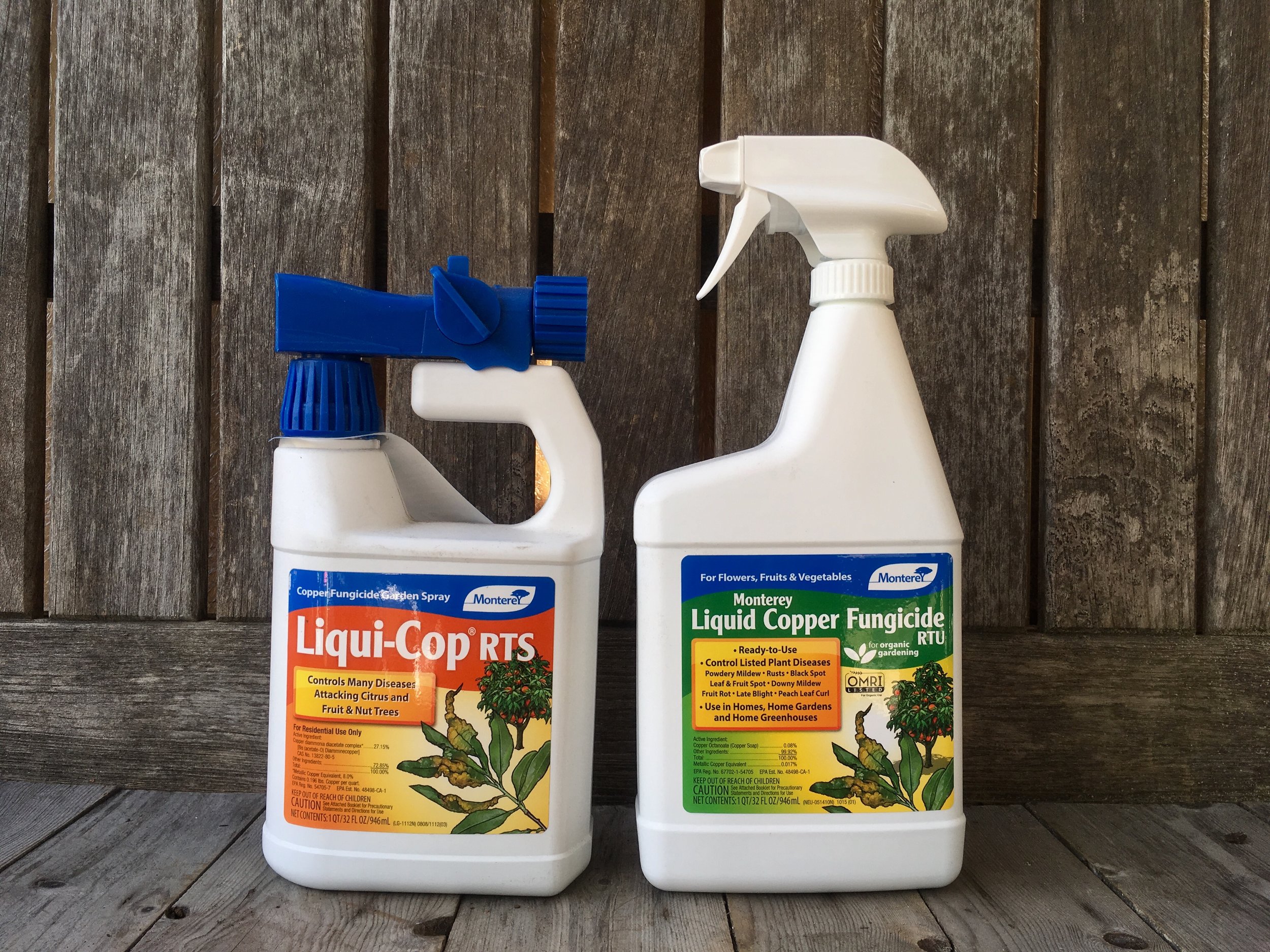
We love their luscious fruit, but peach and nectarine trees are all susceptible to leaf curl, a fungal disease that causes curly, distorted leaves and reduced fruit production. Now is the time to start spraying your trees for prevention of leaf curl. Spray with Copper Fungicide at the rate of 2 ounces per gallon of water. Make your first application at 80% leaf drop, (which is generally around Thanksgiving.)

Make additional applications at bud swell (late winter), popcorn (buds just showing color), full bloom and petal fall. Remember to reapply if it rains within 24 hours of application! 


IMG_2184.jpg

FROST TENDER PLANTS

As we approach our first frost (could be any day now!), stock up on our recommended tools to protect your frost tender plants! Apply Bonide's Wilt Stop to prevent drying out, winter kill, wind burn, transplant shock and more. 

We also recommend covering your plants with our Frost Protection Blankets. Available in a range of sizes and by the foot, we use frost blankets in the nursery ourselves to protect our plants through winter (especially our succulents and citrus) and highly suggest it for your garden. Find Wilt Stop and Frost Protection Blankets near our outside shop. 

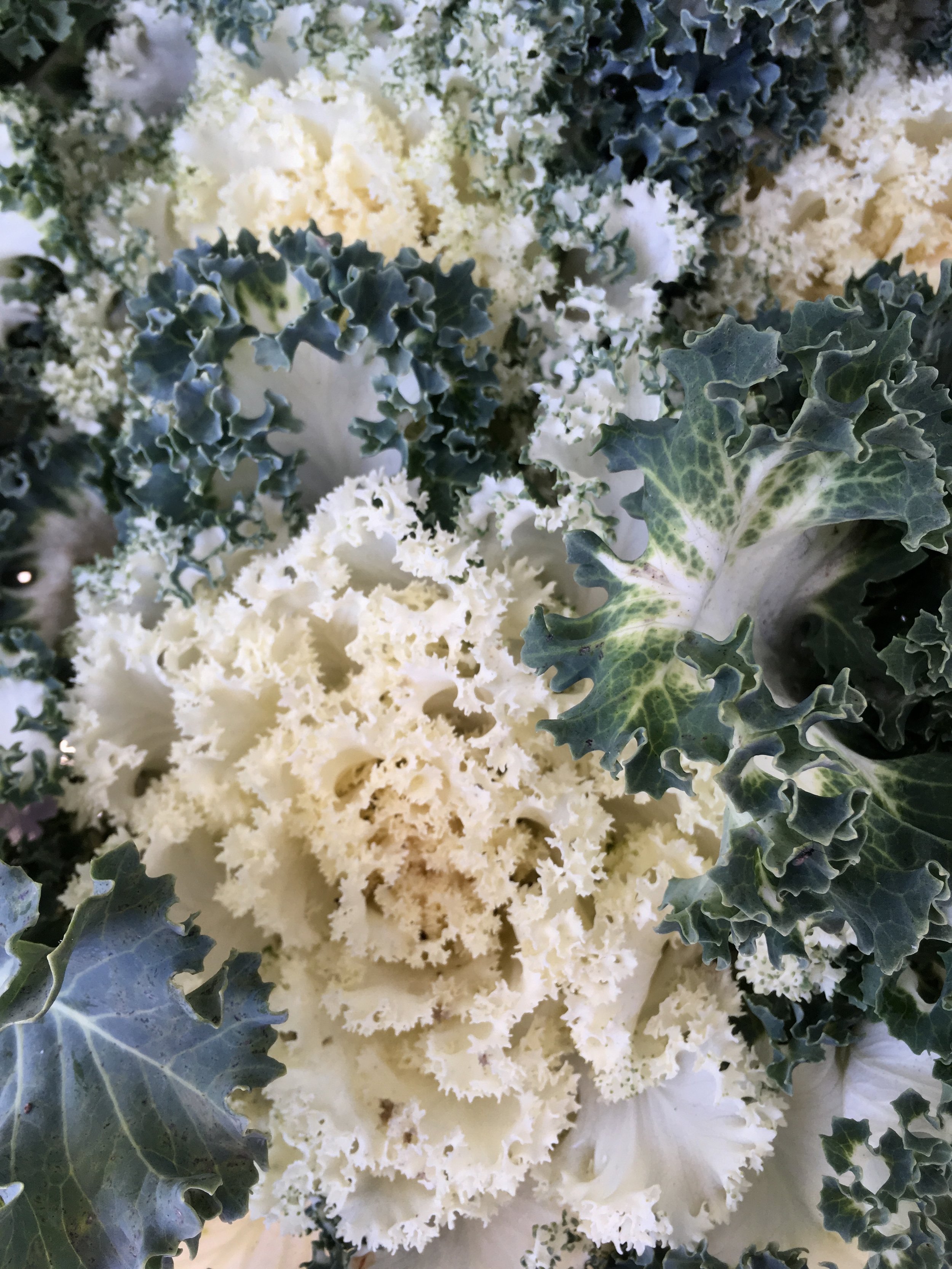
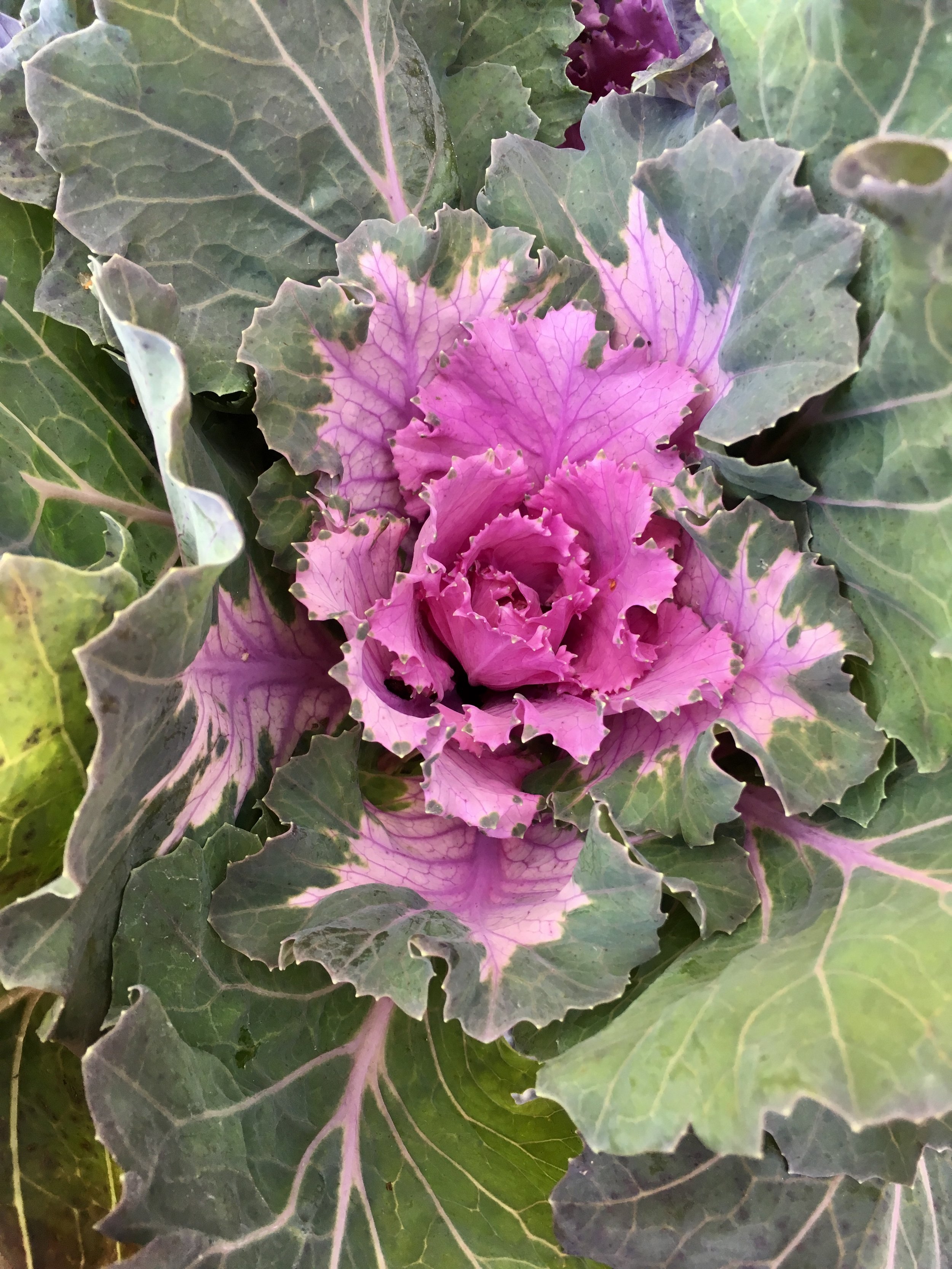
Looking for something frost hardy for quick greenery and a burst of color? Check out our Bedding Department's stock of Ornamental Kale and Cabbage. With varied foliage and available in a range of colors, these ornamentals are one of our favorite winter plants! Questions? Stop into the nursery and let us help you get your garden winter ready! 

ONION SETS

IMG_2098.JPG

It's not all about preventative care this month; just in at the nursery are our onion sets! Sold in bunches of 25, we also have 6-packs available. With red, white and yellow onions available, we're sure you'll find a variety to your liking. Plant now in full sun with fertile, well-drained soil (we recommend mulching!) Hurry in, they’ll go fast!


BAREROOT ROSES AND FRUIT TREES

The deadline to receive 20% off your prepaid order of roses and fruit trees is approaching - December 1st to be exact! All stock will be arriving bareroot in January.

Our Rose List features our must-haves and several new beauties and be sure to check out our Bareroot Fruit List for your favorite farmer's market varieties. December will be here before we know it, give us a call or stop in to place your order this week! 

For more of our tips for your fall garden, be sure to subscribe to our weekly newsletter!